Your Paycheck Comes From an App. Your Proof of Income Doesn’t Have To.
Uber doesn’t mail you a pay stub. Neither does DoorDash, Instacart, or whatever app you drove, delivered, or shopped for last week. Your money’s real; your paperwork just doesn’t exist yet.
That’s what PayStubVault fixes. Enter what you earned, pick your pay period, and get a pay stub for gig workers that looks like it came from payroll, because the math is just as accurate, even if the employer isn’t.

Apps Pay You. They Don’t Paper-Trail You.
Real income deserves a real document, not a screenshot with your thumb in the corner.
Your earnings post to an app dashboard
Your earnings post to an app dashboard, weekly or instantly. Nobody generates a document out of that. It’s just numbers on a screen you control.
A landlord doesn’t open your driver’s app
A landlord doesn’t open your driver’s app to verify income. A lender doesn’t scroll your delivery history. They want one page, formatted the way every other applicant’s income shows up.
A stub translates, it doesn’t invent
A pay stub doesn’t manufacture income; it translates money you already earned into the format banks and landlords are trained to trust at sight.
From App Payout to PDF in About Five Minutes
No employer to loop in. No dashboard export to reformat. Just your numbers, laid out properly.
- Step 01
Tell us who’s earning.
Your name and either a business name or the platform(s) you work through.
- Step 02
Drop in the numbers.
Total earnings, pay period, done — combine two apps into one stub if you need to.
- Step 03
Download and go.
A finished PDF, ready to attach, print, or hand over on the spot.
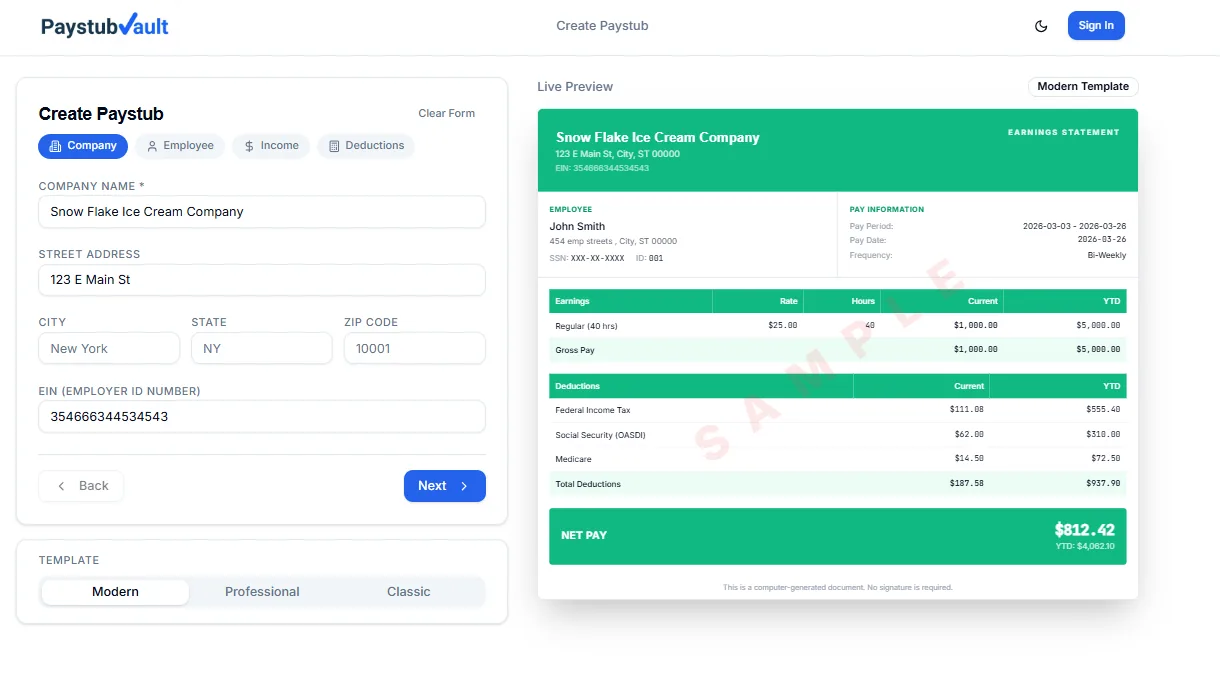
Combines multiple apps
One stub, all your gig income
Made for Income That Doesn’t Come From One Place
Every feature below exists because real gig income is irregular, multi-source, and doesn’t fit a traditional W-2 model.
Zero employer needed
Your platform or business name stands in just fine.
Stack multiple gigs
Drive mornings, deliver nights? One stub, both incomes.
Done in minutes, not days
No waiting on anyone else to generate it.
Looks like every other pay stub
Same format landlords and lenders already trust.
The math checks itself
Totals are calculated automatically; no spreadsheet required.
Pay per stub, not per month
No subscription sitting there when you’re not using it.
The Moments You’ll Actually Need This
These four situations show up more often than gig workers expect, and a clean pay stub handles them all.
Signing an apartment lease
No W-2? Leasing offices still want to see something. A stub covers it.
Applying for a personal or auto loan
Lenders want repeatable, provable income; self employed pay stubs online get you there without a bank interrogation.
Getting a mortgage as a 1099 earner
Underwriters ask self-employed and gig applicants for more paperwork than salaried ones. This is the paperwork.
Visa or immigration paperwork
Some applications flat-out require a formal income document, not a bank printout.
Bottom line: a pay stub is your gig income verification document, the thing you hand over instead of explaining an app’s payout history from memory.
Screenshot vs. Statement vs. Stub — What Actually Works
A screenshot proves the app paid you. A pay stub proves it in a format someone’s actually trained to accept.
| Document | Shows | Falls Apart When |
|---|---|---|
App payout screenshot | What the app says it paid you | It looks exactly like what it is — a screenshot |
Bank statement | Every deposit, plus everything else in your account | Personal spending is right there next to your income |
Pay stub | Clean earnings, period, and net pay | Rarely — it’s what people ask for in the first place |
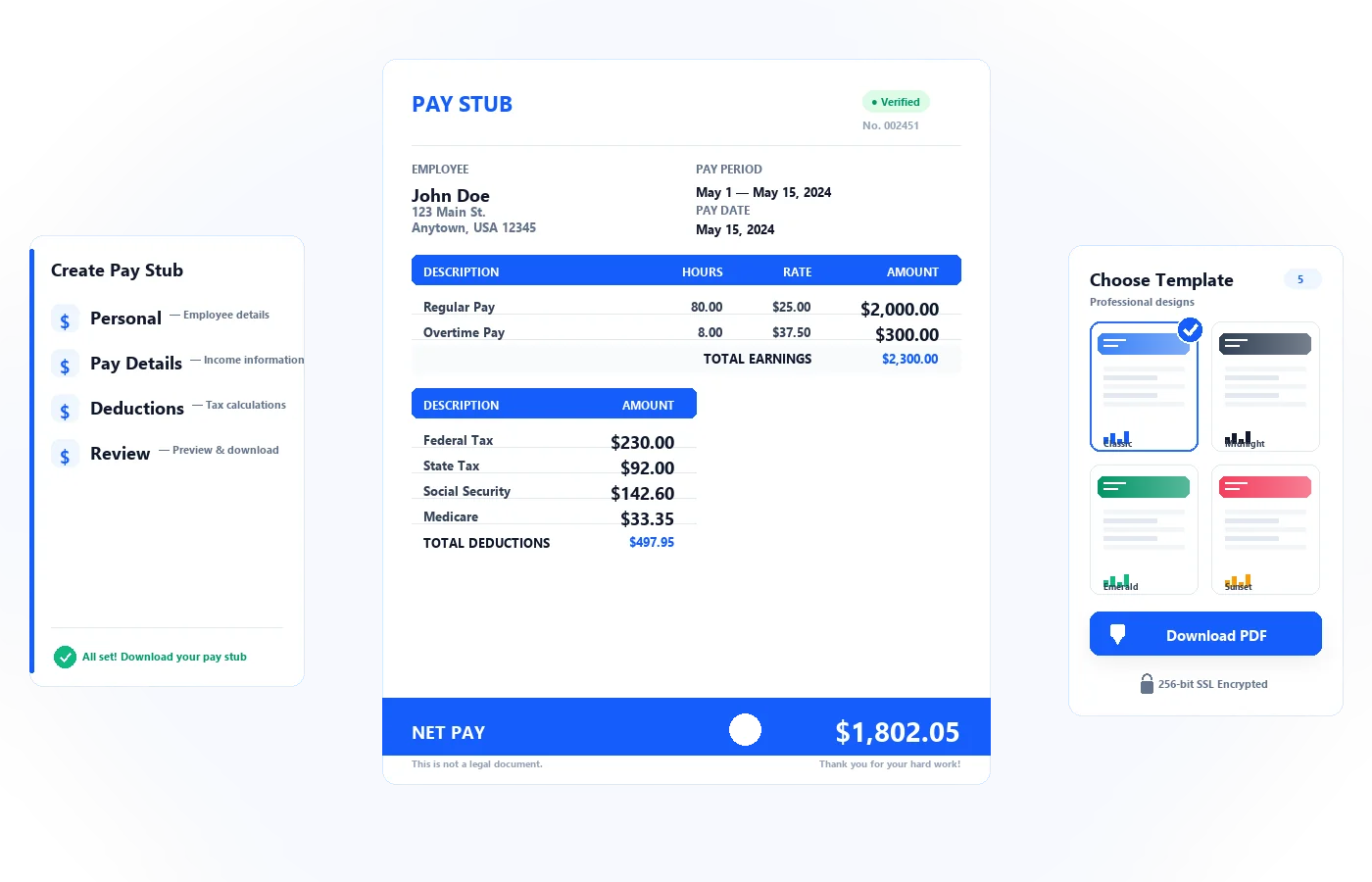
Drivers, Couriers, and Shoppers Already Use This
Not a beta, not a concept — this is already how a lot of gig workers cover their paperwork gaps, right alongside freelancers and self-employed doing the same thing.
In Their Words
Real drivers, couriers, and shoppers who turned app payouts into a clean pay stub.
“Landlord asked, I had it in ten minutes”
Full-time driver, zero paperwork until this. Looked exactly like what the leasing office wanted.
Devon P.
Full-time Driver · Phoenix, AZ
“Two apps, one document”
I never knew how to combine delivery income from two platforms until I found this. The lender didn’t even ask a follow-up question.
Maya L.
Courier (Instacart + Uber Eats) · Brooklyn, NY
“Got my car loan approved”
Self-employed income made me nervous going in. The stub covered everything the bank needed to see.
Jamal S.
Rideshare Driver · Atlanta, GA
“Apartment application approved same day”
I’ve been hopping between apps for a year. The leasing agent said the stub looked just as professional as a regular pay stub. Approved that afternoon.
Riley K.
Shopper (Shipt) · Austin, TX
Before You Ask
Everything gig workers ask about generating pay stubs online.
Is it actually legal to generate my own pay stub as a gig worker?
Yes, as long as it reflects income you genuinely earned. Pay stubs for gig workers exist to document real money, not to invent it. Never use one to overstate earnings.
I don’t have a business name. Can I still make one?
Yes. Plenty of gig workers just list the platform name or their own name. There’s no requirement to have a registered business.
Does this cost anything to try?
Your first stub is free. After that, it’s $1.99 per stub, no subscription, no recurring charge.
I drive for two apps. Do I need two separate stubs?
No — combine both incomes into a single stub covering the same pay period.
Will this look different from a stub someone gets from an actual employer?
Not really. Same layout, same information; the only difference is that the earnings are self-reported instead of pulled from a company’s payroll system.
Other Kinds of Income, Same Problem
If gig work isn’t the only kind of irregular income you’re documenting, these cover the rest.
Self-Employed? Same Story, Different Paperwork.
Running your own thing means nobody’s generating your pay stub for you either. The same logic applies — real income, formatted properly.
See self-employed pay stubsFreelancing Has the Same Gap.
Client invoices aren’t pay stubs; pay stubs for freelancers work the same way this does.
See pay stubs for freelancersContract Work, Documented Properly
A paystub for independent contractor income follows this exact same logic. Project-based, paid-on-completion income that still needs a clean record.
Generate contractor pay stubsRunning a Small Business With Gig Workers on Payroll?
A paystub for small business owners covers your team without a full payroll platform.
Generate small business pay stubsTwo Minutes, Start to Finish. Stop Explaining Your Income.
You already did the work — the driving, the deliveries, the orders picked and packed. All that’s missing is a document that says so in a language landlords and lenders already speak. Build your pay stubs for gig workers now and stop dreading the “can you send proof of income” text.
4.8/5 from 2,400+ gig workers
Start in under 5 minutes
No employer. No payroll software. No subscription. Just your real income, formatted as a professional pay stub.
256-bit SSL•No credit card required•Then $1.99 per stub